
Politics
Let The Renewed Hope Story Be Heard: Tinibu’s Appointees From The North Must Take Message From Grassroot


Let The Renewed Hope Story Be Heard: Tinibu’s Appointees From The North Must
Take Message From Grassroot
There are moments in the life of a nation when those entrusted with public responsibility must rise, speak with conviction and give citizens reasons to believe that tomorrow can be better than today.
For President Bola Ahmed Tinubu’s appointees, especially those from the North, that moment is now.
The Secretary to the Government of the Federation, Senator George Akume, has called on Ministers, Special Advisers, Chairmen and Chief Executive Officers of the Federal Government agencies to communicate the achievements and impact of the administration’s policies more effectively to Nigerians.
The call, made at the Federal Appointees Strategic Summit in Abuja, which was widely reported by Nigerian newspapers.
The message has acquired greater political significance as the country approaches the 2027 presidential election.
As some newspapers had reported, heads of Federal Government agencies had commenced mobilisation for President Tinubu’s re-election, describing themselves as “foot soldiers of the Renewed Hope Agenda.” More recently, another paper reported that Senator Akume led North-Central political leaders launched a grassroots mobilisation campaign for Tinubu and Vice President Kashim Shettima ahead of 2027.
This should be more than just a political activity. It should become a powerful opportunity to tell Nigerians what the Renewed Hope Agenda means in their daily lives.
Those appointed by President Tinubu, especially from the North, should be strategically positioned to communicate the positive reforms of the Tinubu led administration, present measurable achievements and demonstrate how government policies have been creating opportunities, strengthening institutions, improving infrastructure and repositioning the Nigerian economy.
The Northern Nigerian appointees must take the message beyond Abuja, to markets, farms, businesses, universities, local communities and homes at the communities level.
In a statement signed by Co- Convener Nigeria Forward Project Comrade Ibrahim Abdullahi Wayya PhD said the aspirations of the citizens must become the language of the campaign.
The 2027 elections will ultimately belong to Nigerians. They will judge the administration by what they have seen, experienced and understood.
Therefore, Tinubu’s appointees should not merely campaign for continuity, they must explain why continuity matters, defend the administration’s record with evidence and communicate its vision with confidence.
Now, is the time to take the Renewed Hope message to the people.
Let the story be told.
Let the achievements speak.
Let the vision be explained.
And let the Nigerians be convinced that, the journey deserves another mandate.
Renewed Hope must not remain a government slogan. It must become a story Nigerians can see and feel


Exclusive: Three Reasons Behind Gov. Abba’s Sudden Redeployment Of Ibrahim Waiya
Fresh revelations have emerged regarding the circumstances surrounding the sudden redeployment of Kano State Commissioner for Information, Ibrahim Abdullahi Wayya, from the Ministry of Information to the Ministry of Youth and Sports by Governor Abba Kabir Yusuf.
A credible source within the Kano State Government House has disclosed that three major factors reportedly influenced the Governor’s decision: the commissioner’s handling of sensitive public statements, alleged political disagreements within the administration, and his strained relationship with some Civil Society Organisations (CSOs).
1. Unauthorised Public Statements and the Kano Emirate Dispute
According to our source, one of the major concerns was Wayya’s alleged tendency to make sensitive public statements without adequate consultation or clearance from the Governor.
The source claimed that some of his remarks had created unnecessary complications for the government, particularly on politically sensitive and traditional matters, including the Kano Emirate dispute.
More recently, following comments attributed to Alhaji Aminu Babba Dan’agundi, Sarkin Dawaki Babba and Senior Counsellor to the 15th Emir of Kano, Alhaji Aminu Ado Bayero, concerning restrictions imposed by the state government on certain traditional activities, Wayya reportedly issued a strong response.
Although he did not mention Dan’agundi by name, his challenge that anyone who considered himself courageous should come out for a confrontation and go to Sambisa was widely interpreted by sections of the public as being directed at him.
Our source disclosed that Governor Abba Kabir Yusuf was reportedly displeased with the development, particularly over allegations that the commissioner made the remarks without his knowledge or authorisation.
The situation was reportedly followed by a private meeting between the Governor and Alhaji Aminu Babba Dan’agundi at the Kano State Government House in Abuja.
2. Political Disagreements and Exclusion from the Presidential Campaign Council
The second factor reportedly concerns Wayya’s alleged disagreements with influential political figures and power blocs within the Kano State Government.
According to our source, these differences increasingly affected his political standing within the administration and his relationship with some members of its inner circle.
An indication of this alleged political disconnect was reportedly evident in the composition of the presidential campaign committee established by Governor Abba Kabir Yusuf ahead of the 2027 elections.
Despite being the Commissioner for Information and one of the principal officials responsible for communicating government policies and achievements, Wayya was reportedly excluded from the committee.
More significantly, the Governor appointed Hon. Garba Yusuf Abubakar as the committee’s spokesperson.
Political observers may interpret this decision as an indication that the Governor preferred a different communication arrangement for one of the administration’s most important political assignments.
For our source, Wayya’s exclusion, particularly the appointment of another individual as spokesperson, reflected the growing distance between the commissioner and the political leadership of the administration.
3. Strained Relationship with Civil Society Organisations
The third factor reportedly relates to Wayya’s strained relationship with some Civil Society Organisations operating in Kano State.
Our source recalled an earlier incident in which some organisations reportedly called on the state government to remove him from the leadership of a committee whose responsibilities directly affected their interests.
Their demand was reportedly based on allegations and concerns regarding his leadership and handling of the committee’s affairs.
According to the source, the growing disagreements between the commissioner and sections of civil society had become an additional concern for the administration, particularly given the importance of maintaining constructive relationships with non-governmental stakeholders.
Political Implications: A Demotion or Administrative Redeployment?
Reacting to the development, political commentator Dr. Mujahid Musa Abdullahi argued that moving Ibrahim Abdullahi Wayya from the Ministry of Information to Youth and Sports carries significant political implications.
He observed that the Ministry of Information is one of the most strategic positions in government because its commissioner plays a central role in shaping the public image of the entire administration, communicating policies and defending government decisions.
Consequently, moving someone from such a sensitive position to a ministry with a different operational focus could be interpreted as a reduction in political influence and responsibility, even if the government considers it an ordinary administrative redeployment.
For now, the three factors identified by our source provide possible insight into the circumstances behind Governor Abba Kabir Yusuf’s decision.
However, the Kano State Government has yet to publicly confirm these reported reasons, while Ibrahim Abdullahi Wayya has not been quoted as responding to the allegations in this report.
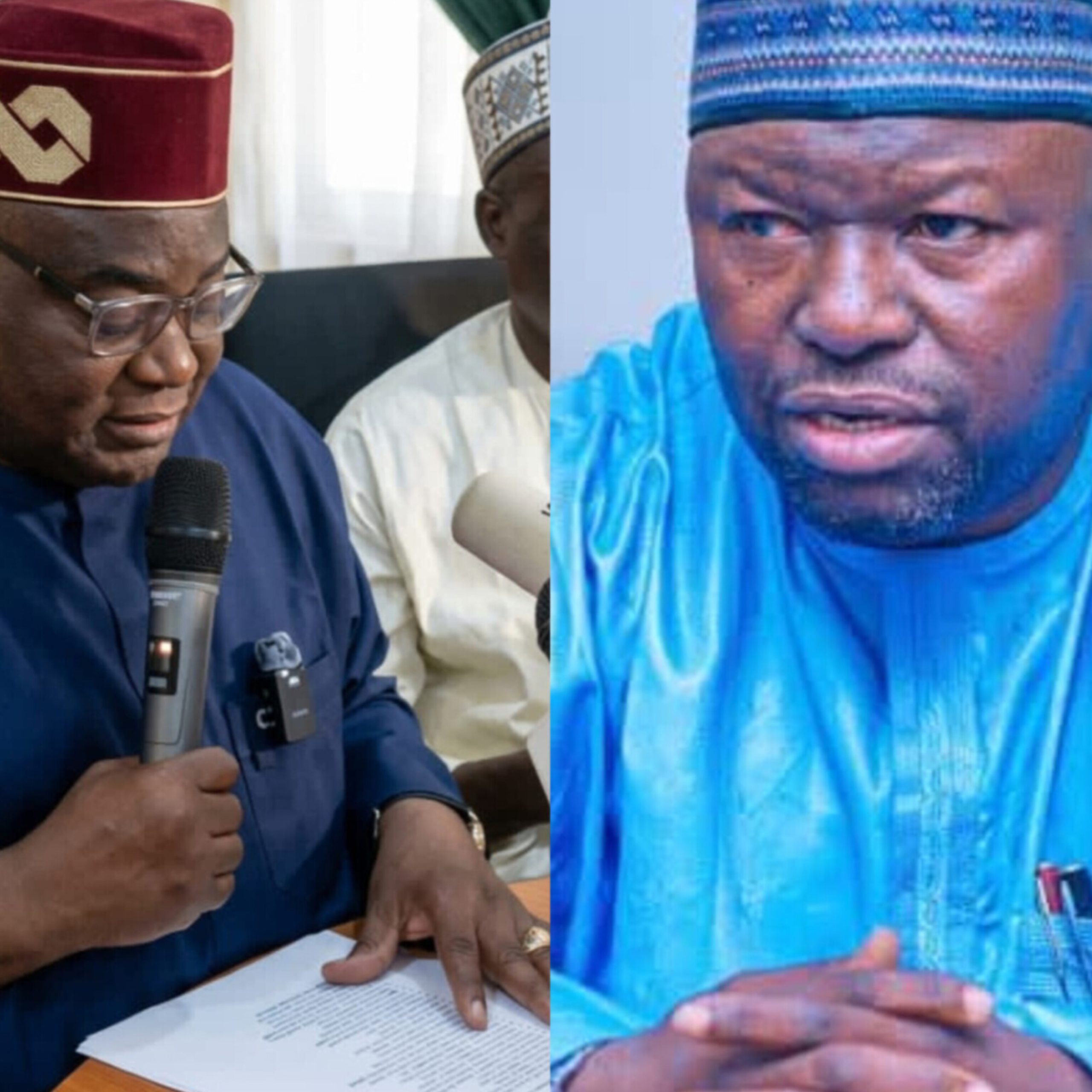
THE REWARD FOR HARD WORK IS MORE WORK: A REJOINDER TO DR GARBA UBALE DANBATTA
By Nworisa Michael
The redeployment of Hon. Comr. Ibrahim Abdullahi Waiya PhD from the Ministry of Information and Internal Affairs to the Ministry of Youth and Sports Development has attracted several reactions. While professional and civic organisations have congratulated him and acknowledged his contributions, Dr Garba Ubale Danbatta, a supposedly veteran journalist, has chosen to use the development to question his performance and professional conduct in his former ministry.
Dr Danbatta is entitled to his opinion. Nobody should be above criticism, especially in public office. However, when criticism is presented as a professional assessment, it should be supported by facts, not merely personal convictions or years of experience.
Before concluding that journalism suffered under Waiya, perhaps we should examine some of the developments recorded during his tenure.
Eight contributions worth considering:
• Grassroots information: Strengthened engagement with Information Officers across Kano’s 44 local government areas and eight zonal offices.
• Capacity building: Supported training programmes for local government Information Officers, alongside interactive engagements with editors and news managers.
• Media policy: Facilitated the inauguration of an 18-member committee to develop a media and information policy framework for Kano State.
• Digital transformation: Established a Digital Multimedia Department to modernise government communication, improve digital engagement and address misinformation.
• Peacebuilding: Advanced the Safe Corridor Project, an initiative focused on rehabilitation, skills development and reintegration of reformed youths.
• Media engagement: Engaged media practitioners, online publishers and political programme presenters on responsible public communication and professional conduct.
• Institutional development: Pursued interventions aimed at strengthening state-owned media institutions and improving the capacity of personnel within the information machinery.
• National recognition: Received the Crisis Communicator of the Year award at the 2026 National Spokespersons Awards in Abuja.
These developments do not mean that Waiya’s tenure was without shortcomings. They simply demonstrate that there is more to his record than the sweeping conclusion offered by his critic.
There is also something interesting about the public reactions to his redeployment. The Kano State Forum of Information Officers, Northern Youths Assembly and International Peace and Secure Society are among the organisations that have publicly acknowledged his contributions and congratulated him on his new assignment. Their statements may not settle every debate about his tenure, but they show that his work was not viewed negatively by everyone who interacted with his ministry.
Now, to Dr Danbatta’s presentation of his professional experience.
I found it rather curious that a commentary intended to assess another public officer’s performance devoted three of its concluding paragraphs to the author’s own professional journey, positions held and years of experience. One could almost finish reading the piece knowing more about the author’s resume than the evidence behind his criticism of Waiya.
Same individual who has been unable to ensure good working relationship with his staffs at Pyramid Radio Kano where is currently serves as its manager, a station that constantly runs out of diesel and goes off the air, perhaps even he isn’t proud of this hence he left it out from the list of his workplaces listed.
With due respect, professional experience is valuable, but it should strengthen an argument, not become the argument itself. A good product sells itself. A journalist’s professional standing should be reflected in the quality, fairness and depth of their analysis. Thirty years in the profession deserves recognition, but it does not automatically make every opinion conclusive.
If the intention was to assess Waiya’s stewardship, then the more important questions should have been: What did he inherit? What did he change? Which initiatives did he introduce? What measurable outcomes were achieved? And where did he fall short? Those are the questions that give criticism substance.
We can be safe to say that Waiya’s redeployment was a direct reward for his performance in the former ministry. The Governor has publicly explained the cabinet adjustments as part of efforts to strengthen institutions and improve service delivery. What is evident, however, is that Waiya has been entrusted with another important responsibility, and his record in the former ministry remains open to public examination.
The Ministry of Information and Internal Affairs is not beyond criticism, and neither is Dr. Waiya. But fairness requires that we acknowledge the work done alongside the shortcomings alleged.
Frankly the most fitting way to understand this new assignment is captured in the title of this piece: the reward for hard work is more work. His previous assignment is now part of his public record; his new ministry presents another opportunity to serve.
Congratulations, Hon. Comr. Ibrahim Abdullahi Waiya. The expectations continue.
Nworisa Michael is a
Writer, Public Affairs Commentator and writes from nworisamichael1917@gmail.com
1st Nov. 2026
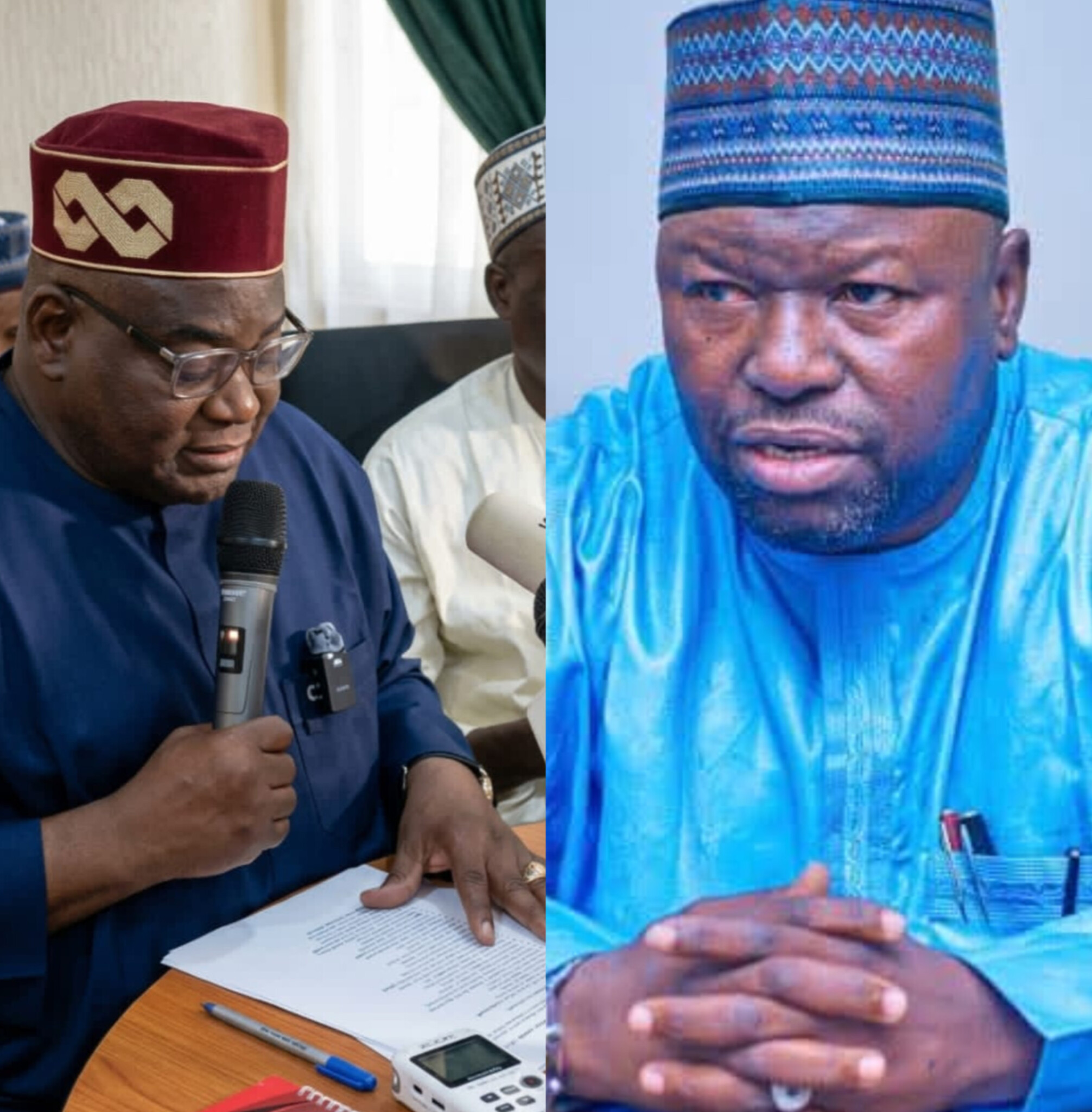
THE REWARD FOR HARD WORK IS MORE WORK: A REJOINDER TO DR GARBA UBALE DANBATTA
By Nworisa Michael
The redeployment of Hon. Comr. Ibrahim Abdullahi Waiya PhD from the Ministry of Information and Internal Affairs to the Ministry of Youth and Sports Development has attracted several reactions. While professional and civic organisations have congratulated him and acknowledged his contributions, Dr Garba Ubale Danbatta, a supposedly veteran journalist, has chosen to use the development to question his performance and professional conduct in his former ministry.
Dr Danbatta is entitled to his opinion. Nobody should be above criticism, especially in public office. However, when criticism is presented as a professional assessment, it should be supported by facts, not merely personal convictions or years of experience.
Before concluding that journalism suffered under Waiya, perhaps we should examine some of the developments recorded during his tenure.
Eight contributions worth considering:
• Grassroots information: Strengthened engagement with Information Officers across Kano’s 44 local government areas and eight zonal offices.
• Capacity building: Supported training programmes for local government Information Officers, alongside interactive engagements with editors and news managers.
• Media policy: Facilitated the inauguration of an 18-member committee to develop a media and information policy framework for Kano State.
• Digital transformation: Established a Digital Multimedia Department to modernise government communication, improve digital engagement and address misinformation.
• Peacebuilding: Advanced the Safe Corridor Project, an initiative focused on rehabilitation, skills development and reintegration of reformed youths.
• Media engagement: Engaged media practitioners, online publishers and political programme presenters on responsible public communication and professional conduct.
• Institutional development: Pursued interventions aimed at strengthening state-owned media institutions and improving the capacity of personnel within the information machinery.
• National recognition: Received the Crisis Communicator of the Year award at the 2026 National Spokespersons Awards in Abuja.
These developments do not mean that Waiya’s tenure was without shortcomings. They simply demonstrate that there is more to his record than the sweeping conclusion offered by his critic.
There is also something interesting about the public reactions to his redeployment. The Kano State Forum of Information Officers, Northern Youths Assembly and International Peace and Secure Society are among the organisations that have publicly acknowledged his contributions and congratulated him on his new assignment. Their statements may not settle every debate about his tenure, but they show that his work was not viewed negatively by everyone who interacted with his ministry.
Now, to Dr Danbatta’s presentation of his professional experience.
I found it rather curious that a commentary intended to assess another public officer’s performance devoted three of its concluding paragraphs to the author’s own professional journey, positions held and years of experience. One could almost finish reading the piece knowing more about the author’s resume than the evidence behind his criticism of Waiya.
Same individual who has been unable to ensure good working relationship with his staffs at Pyramid Radio Kano where is currently serves as its manager, a station that constantly runs out of diesel and goes off the air, perhaps even he isn’t proud of this hence he left it out from the list of his workplaces listed.
With due respect, professional experience is valuable, but it should strengthen an argument, not become the argument itself. A good product sells itself. A journalist’s professional standing should be reflected in the quality, fairness and depth of their analysis. Thirty years in the profession deserves recognition, but it does not automatically make every opinion conclusive.
If the intention was to assess Waiya’s stewardship, then the more important questions should have been: What did he inherit? What did he change? Which initiatives did he introduce? What measurable outcomes were achieved? And where did he fall short? Those are the questions that give criticism substance.
We can be safe to say that Waiya’s redeployment was a direct reward for his performance in the former ministry. The Governor has publicly explained the cabinet adjustments as part of efforts to strengthen institutions and improve service delivery. What is evident, however, is that Waiya has been entrusted with another important responsibility, and his record in the former ministry remains open to public examination.
The Ministry of Information and Internal Affairs is not beyond criticism, and neither is Dr. Waiya. But fairness requires that we acknowledge the work done alongside the shortcomings alleged.
Frankly the most fitting way to understand this new assignment is captured in the title of this piece: the reward for hard work is more work. His previous assignment is now part of his public record; his new ministry presents another opportunity to serve.
Congratulations, Hon. Comr. Ibrahim Abdullahi Waiya. The expectations continue.
Nworisa Michael is a
Writer, Public Affairs Commentator and writes from nworisamichael1917@gmail.com
1st Nov. 2026


DSS Tenders Apology To NUJ Sokoto State Council Over Assault On Its Member
WhatsApp Facebook Twitter Pinterest LinkedIn Copy LinkDSS Tenders Apology To NUJ Sokoto State Council Over Assault On Its Member The...

Kebbi Govt Dismisses ADC’s Allegations Over Land Demolition
WhatsApp Facebook Twitter Pinterest LinkedIn Copy LinkKebbi Govt Dismisses ADC’s Allegations Over Land Demolition Kebbi State Government has dismissed allegations...


Exclusive: Three Reasons Behind Gov. Abba’s Sudden Redeployment Of Ibrahim Waiya
WhatsApp Facebook Twitter Pinterest LinkedIn Copy LinkExclusive: Three Reasons Behind Gov. Abba’s Sudden Redeployment Of Ibrahim Waiya Fresh revelations have...

NIPR Kano Congratulates Sanusi Bature On Successful Screening By KNHA As Commissioner
WhatsApp Facebook Twitter Pinterest LinkedIn Copy LinkNIPR Kano Congratulates Sanusi Bature On Successful Screening By KNHA As Commissioner … Describes...
NUJ Kano Council Congratulates Sunusi Bature As Commissioner For Information
WhatsApp Facebook Twitter Pinterest LinkedIn Copy LinkNUJ Kano Council Congratulates Sunusi Bature As Commissioner For Information The Nigeria union of...

Kano Assembly Confirms Ex-Speaker Gani, Sunusi Bature As Commissioners
WhatsApp Facebook Twitter Pinterest LinkedIn Copy LinkKano Assembly Confirms Ex-Speaker Gani, Sunusi Bature As Commissioners The Kano State House of...


D/Tofa Citizens Concerned Hails Gov. Abba For The Nomination Of Sunusi Bature As Commissioner
WhatsApp Facebook Twitter Pinterest LinkedIn Copy LinkD/Tofa Citizens Concerned Hails Gov. Abba For The Nomination Of Sunusi Bature As Commissioner...
D/Tofa Concerned Citizens Hails Gov. Abba The Nomination Of Sunusi Bature As Commissioner
WhatsApp Facebook Twitter Pinterest LinkedIn Copy LinkD/Tofa Concerned Citizens Hails Gov. Abba The Nomination Of Sunusi Bature As Commissioner Community...

THE REWARD FOR HARD WORK IS MORE WORK: A REJOINDER TO DR GARBA UBALE DANBATTA
WhatsApp Facebook Twitter Pinterest LinkedIn Copy LinkTHE REWARD FOR HARD WORK IS MORE WORK: A REJOINDER TO DR GARBA UBALE...

THE REWARD FOR HARD WORK IS MORE WORK: A REJOINDER TO DR GARBA UBALE DANBATTA
WhatsApp Facebook Twitter Pinterest LinkedIn Copy LinkTHE REWARD FOR HARD WORK IS MORE WORK: A REJOINDER TO DR GARBA UBALE...
-

 News1 month ago
Kano SERVICOM Directorate, ROLLAC II Strengthen Partnership on Service Delivery
-

 News2 months ago
MPPPME Submits Key Achievements, Proposed Legacy Projects For AKY 2027 Blueprint
-
Entertainment2 months ago
WACP Accreditation Team Impreses Khalifa Isyaka Rabi’u Paediatric Hospital Kano
-

 News2 months ago
International Literacy Day: AHIP Calls for Stronger Investment in Literacy, Digital Skills
-
 News2 months ago
Kano Schools To Resume For First Term On 7th August 2026
-
 News2 months ago
Forum Of Kano State Former MDs, DGs Of Agencies, Parastatals 2015-2023 Congratulates Ganduje
-
 Politics2 months ago
Northern Senators demand immediate release of abducted Borgu residents
-
 News2 months ago
KASPA Explores Lagos’ Digital, Data-Driven Social Protection System